


Drilling Machine And Milling Machine
ADTECH (SHENZHEN) TECHNOLOGY CO., LTD. was established in 2002. As the leader of domestic motion control solutions provider, ADTECH had been build up the motion control, motor drive, CNC control system application and industrial robots in total four major products. ADTECH products are widely used in industrial robots, printing and packaging, metal processing, light textile, home, electronic equipment, special machine tools and other fields, become the representative brand in the field of motion control industry application. Companies in key cities across the country set up a liaison office and service centers, and gradually establish a global sales and service network, products have been exported to Europe and the United States, the Middle East, Southeast Asia, Hong Kong and Taiwan, 111 countries and regions.
Why Choose Us?
Quality control
We have strict quality control measures to ensure the quality of products leaving the factory.
Advanced equipment
Our company had been build up the motion control, motor drive, CNC control system application and industrial robots in total four major products.
One-stop solution
12 months warranty, online technical service and agent local support.
Service support
CNC Programming Application System with completely independent intellectual property, Motion Control Solution and its supporting application software.
-
![Small Precision CNC Lathe Machine Used For Education]() Small Precision CNC Lathe Machine Used For EducationProduct introduction: The feed axis of this small lathe machine is controlled by X, Z-axis, and the two axis are driven by stepping motor with drive, which can realize the turning and thread...read more
Small Precision CNC Lathe Machine Used For EducationProduct introduction: The feed axis of this small lathe machine is controlled by X, Z-axis, and the two axis are driven by stepping motor with drive, which can realize the turning and thread...read more -
![Educational Precision CNC Drilling And Milling Machine]() Educational Precision CNC Drilling And Milling MachineProduct introduction: The CNC9640-EDU2 is a 3 axis cnc milling machine which is controlled by X,Y,Z axis and the three axes are driven by stepping motors. The machine is inexpensive and...read more
Educational Precision CNC Drilling And Milling MachineProduct introduction: The CNC9640-EDU2 is a 3 axis cnc milling machine which is controlled by X,Y,Z axis and the three axes are driven by stepping motors. The machine is inexpensive and...read more -
![Small Precision CNC Drilling And Milling Machine Used For Education]() Small Precision CNC Drilling And Milling Machine Used For...The CNC9640-EDU is a 3 axis cnc milling machine which is controlled by X,Y,Z axis and the three axes are driven by stepping motors, which can realize the drilling, milling, boring and expanding,...read more
Small Precision CNC Drilling And Milling Machine Used For...The CNC9640-EDU is a 3 axis cnc milling machine which is controlled by X,Y,Z axis and the three axes are driven by stepping motors, which can realize the drilling, milling, boring and expanding,...read more


What Is Drilling Machine and Milling Machine?
A drilling machine, also called a drill press, is used for making vertical holes in a work surface with a rotating tool.
A milling machine has the same capability as a drill press, but also has the capability to cut with the side of cutting tools.
A drill press is designed to be very stiff against vertical thrust loads. A milling machine is designed to handle vertical thrust loads and sideways thrust loads caused by cutting with the side of the tool.
Benefits of Drilling Machine and Milling Machine
-
The milling machine's size and rugged structure provide amazing support for handling larger and heavier equipment without causing damage.
-
It offers a variety of computer-controlled cutting possibilities.
-
It minimizes the possibility of human mistakes.
-
It ensures precise cutting.
-
Customization is possible.
-
Utilization of several cutters.
-
It is capable of doing many cuts concurrently.
-
Milling is ideal for manufacturing small or big quantities of individual parts.
-
It is capable of making intricate forms with the use of teeth with multiple functions and tools with point cutting.
-
By using general-purpose cutters and equipment, operating expenses may be significantly reduced.
-
Superior accuracy in finishing work

Portable drilling machine
A portable drilling machine is a small-size, hand-operated power drill, mainly used for making small holes up to 12mm in an object in any position. It can drill a hole through woods, plastic, metal, and concrete. Due to their small size and mobility, portable drill machines are used by woodworkers, house owners, plumbers, electricians, and industrial workers.
Bench drilling machine
This is a drill machine used for making holes in wood and metals. You can also perform various cutting operations such as boring, reaming, and taping. This drilling machine is capable of drilling holes up to 12.5 mm diameter in steel. And, it is widely used by woodworkers and manufacturing industries.
Pillar drilling machine
Also known as an upright drilling machine, a pillar drill machine is an advanced drill machine used for making 20mm to 40mm holes in metal and wood. It looks similar to a bench drill machine. But it has a more powerful motor and more drilling capacity compared to a bench drill machine.
Radial drilling machine
This is a machine in which the drilling head is mounted to slide along a radial arm which can be rotated, raised, or lowered on a vertical pillar to adjust the position of the drill bit above the workpiece.It is mostly used in manufacturing machine shops to make a hole up to 80mm diameter in large, heavy workpieces.
Gang drilling machine
A gang drill machine is a multi-column drilling machine in which numerous drill heads and columns are mounted on a single table.It is mainly used for drilling holes in a workpiece successively. Various machining operations like drilling, reaming, counter drilling, tapping can be performed using this machine.
Multi-spindle drilling machines
This is a special-purpose machine tool in which the drill head consists of numerous spindles driven by a single motor. It is commonly used in manufacturing shops to drill multiple holes together at the same time.
The main purpose of the multi-spindle drilling machine is to increase production and to reduce the operation time.
Deep hole drilling machine
This is a special breed of drilling machine mostly used to make deeper holes in various parts like spindles, barrels, connecting rods, and certain oil-well drilling equipment.
Types of Milling Machine
Vertical milling machine
Vertical milling machine is a machine tools commonly used in workshops to create slots, grooves, and flat surfaces in working pieces. The machine comes with vertically aligned spindle with worktable and you can move the spindle up or down according to your requirement.Unlike horizontal milling machine, vertical milling machine does not require Arbor.
Horizontal milling machines
As its name suggests, horizontal milling machines are named for their position. They work by moving the bench; the workpiece is placed sideways whilst the cutting tool moves vertically.
Tracer controlled milling machine
A traced controlled milling machine is a reverse engineering type of milling machine that can easily replicate or reproduce the prototype part without any coding. It comes with a tracing head mounted on the cross rail which is used to trace the dimension of the model parts.This machine is mainly used for machining cams, grooves, contoured surfaces, die sinking, and reproducing of dies etc.
Turret milling machines
A turret machine is a versatile milling machine used to create many parts. Also known as a Bridgeport-type milling machine, these machines can be repositioned, opening a broader range of uses.
C-Frame milling machines
C-frame milling machines are sturdy and powerful. They use a hydraulic motor and are best utilised in industrial settings.
Bed-Type milling machines
The worktable of a bed-type milling machine is placed on the bed itself, as opposed to on top as with other milling machines. On a bed-type machine, the knee is omitted to allow for longitudinal movement.
Planer-Style milling machines
A planer-style milling machine is similar to a bed-type machine. However, this type of milling machine offers more milling capabilities due to the addition of cutters and heads.
Gantry milling machines
Gantry milling machines are essential for precision engineering, creating moulds, dies and models and styling machining. These machines can often be found in the Aerospace and Power Generation industries.
Travelling column machines
Travelling column milling machines can handle larger parts and multitask. With moving, pivot and tilt elements, travelling column machines are often used in the automotive, aerospace, defence, energy and oil industries.
Base
The base of the drilling machine supports the machine and can either be fixed to a workshop floor or mounted to a work table in the case of smaller machines. Some bases have slots to allow for bolting and holding larger workpieces that cannot fit on the table.
Column
The column is usually a hollow, cylindrical structure that connects the base, table, and head of a drilling machine. The column also serves as a linear slide on which the table moves up and down. The table clamps onto the column once positioned as desired.
Arm
On larger drilling machines the arm is attached to the column and is used to support the spindle and drill chuck. The arm also allows for some travel in a direction perpendicular to the column. Smaller machines do not have an arm and instead, have the spindle positioned relatively close to the column on the head assembly.
Drill head
The drill head contains the spindle, feed mechanism, and drill chuck. The spindle is usually driven by an electric motor via a gearbox. For larger machines with arms, the electric motor's power can be transmitted via a series of V-belts and pulleys.
Worktable
The table provides a stable surface for the workpiece. It can be raised or lowered to adjust the drill bit's distance from the workpiece.


Feed mechanism
The feed mechanism is designed to control the rate at which the drill is lowered into the material. The optimal feed rate and the speed of the drill bit are determined by the type of material being drilled and the size of the drill bit.
Spindle
The spindle is a shaft assembly with bearings that connects the electric motor to the chuck. Spindles are designed to have as little rotational eccentricity as possible to ensure drilled holes are concentric.
Chuck
The chuck is a mechanism used to grip the tool tightly enough to stop the tool from slipping during drilling operations. A drill chuck typically has three jaws whose position can be adjusted to account for different drill bit diameters. When adjusted, these jaws move either radially inwards or outwards to account for different diameters.
Electric motor
The electric motor drives the spindle either directly with a gearbox or with a series of belts and pulleys. The electric motor can either be mounted to the base of the machine or at the top of the column. Like the feed rate, the rotational speed can be adjusted for different drill bits and materials. Drills that allow for tapping also need to have very low minimum speeds on the electric motor. In this case, a VSD (Variable Speed Drive) is installed.
Components of Milling Machine
Column and base: The column and base of a milling machine support the other components.
Knee: A vertical positioning screw, often known as an elevating screw, supports and adjusts the knee.
Saddle and swivel table: The saddle is on the knee and supports the table, while the Swivel table is attached to the saddle, which swivels (revolves) horizontally in both directions.
Power feed mechanism: The power feed mechanism is located in the knee. The longitudinal (left and right), transverse (in and out), and vertical (up and down) feeds are all controlled by it.
Table: On the top of the saddle, there is a rectangular casting called a table.
Spindle: The spindle of a milling machine is the shaft that holds and drives the cutting tools.
Over arm / overhanging arm: This is a horizontal beam that runs the column's top face length. It could be a single casting that slides along the dovetail channels on the column's top face.
Arbor support: An arbor support is a casting with a bearing that supports the arbor's outer edge. It also aids in aligning the arbor's outer end with the spindle.
Ram: The vertical machine's overhanging arm is known as the ram.

How to Maintain Drilling Machine
Keep away from water
Regardless of where you store it, keep your power drill away from water. Water and power drills don't mix. Assuming you have an electric power drill-whether battery or corded-water can permanently damage. Additionally, water can cause your power drill to rust. You'll need to store your power drill in a dry environment to protect it from water damage.
Wait for it to cool
Power drills generate heat during use. As the head spins, it will generate heat due to friction. This is completely normal and isn't reason for concern. With that said, you shouldn't store your power drill if it's still hot. If you immediately transfer your power drill to a case after using it, the heat will remain trapped. Instead, wait for your power drill to cool before storing it.
Lubricate regularly
Don't forget to lubricate your power drill on a regular basis. You can refer to the owner's manual for more information on how to lubricate your power drill. Most power drills support lubricant. You can apply a lubricant, such as oil, to the chuck so that it spins more freely.
Clean regularly
In addition to lubricating, you should clean your power drill regularly. All power drills will accumulate dirt and debris during use. When drilling a hole into a surface, some of the material within that surface will be removed. As it exits the surface's hole, the material will land on your power drill. You can clean your power drill using compressed air. A few blasts of compressed air should dislodge and remove most of this debris.
Replace dull bits
You should replace dull bits as well. A bit, of course, is a small tool that's secured to the chuck of a power drill. There are drill bits, for instance, that are used to drill holes into surfaces. Over time, bits can become dull. They'll lose their otherwise sharp point, which can make them harder to use. Replacing dull bits will improve the performance of your power drill while also reducing unnecessary wear and tear.
1.Keep it clean: Regularly clean the milling machine to remove any debris or build-up of metal shavings. Use a brush or air compressor to remove debris from the bed and ways, and wipe down the machine with a clean cloth.
2.Lubricate moving parts: The milling machine's moving parts, such as the leadscrew, feed rod, and quill, should be lubricated regularly to ensure smooth operation. Use a high-quality lubricant, such as way oil or machine oil, and follow the manufacturer's recommendations for how often to lubricate the machine.
3.Check the alignment: Check the alignment of the milling machine's head, tail and the table. This can be done by measuring the distance between the bed and the centerline of the spindle in both the head and tail.
4.Inspect the tool holders: Inspect the tool holders for wear or damage. Make sure that the tool holders are properly aligned with the spindle. Check for any chips or cracks in the tool holders and replace them if necessary.
5.Check the belts: Check them for wear and make sure they are correctly tensioned. Loose belts can cause the machine to vibrate and damage the belts and pulleys.
6.Check the coolant: Check the coolant levels and make sure they are clean and free of debris. Change the coolant regularly, according to the manufacturer's recommendations.
7.Check the electrical components: Inspect the electrical components, such as the motor, wiring, and switches, to ensure they are in good working order. Check for any frayed wires or loose connections and repair them as necessary.
8.Check for proper tightening of all bolts and nuts.
9.Regularly inspect the machine for any wear, damage or unusual noise, and take action as soon as you notice any issues.
Our Factory
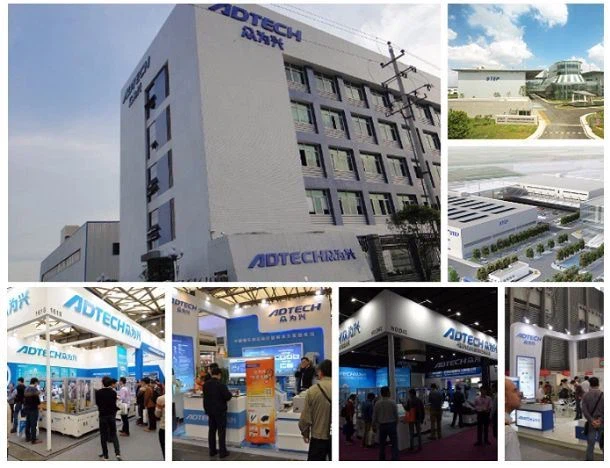
The factory is an associated company ADTECH (SHENZHEN) TECHNOLOGY CO.,LTD, located in Building B3, Pujing Guangmimng High-Tech Park, Guangming New District, Shenzhen. It occupy 7,560 square meter, has 144 employee. We have our own brand. Also accept ODM&OEM. Meanwhile, We have strict quality control measures to ensure the quality of products leaving the factory.
FAQ
Q: What is the difference between a milling machine and a drilling machine?
Q: Can drilling machine be used for milling?
Q: What is the difference between turning milling and drilling?
Q: What is milling in drilling?
Q: Why would you use a milling machine?
Q: Why is milling better than drilling?
Q: Can a mill drill holes?
Q: Is milling harder than lathe?
Q: Is CNC turning or milling?
Q: Which is better turning or milling?
Q: Can a milling machine hold cutters at a time?
Q: What is the main difference between a drill bit and an end mill?
Q: What is a milling machine in simple words?
Q: What are the two main types of milling machines?
Q: What are the two types of milling machine?
Q: Which milling method is best?
Q: What type of machining is milling?
Q: What is an example of a milling machine?
Q: Can a milling machine cut round holes?
Q: Can a CNC mill tap a hole?
As one of the most professional drilling machine and milling machine manufacturers and suppliers in China, we're featured by quality products and good service. Please rest assured to buy customized drilling machine and milling machine at competitive price from our factory.