


CNC Controller
ADTECH (SHENZHEN) TECHNOLOGY CO., LTD. was established in 2002. As the leader of domestic motion control solutions provider, ADTECH had been build up the motion control, motor drive, CNC control system application and industrial robots in total four major products. ADTECH products are widely used in industrial robots, printing and packaging, metal processing, light textile, home, electronic equipment, special machine tools and other fields, become the representative brand in the field of motion control industry application. Companies in key cities across the country set up a liaison office and service centers, and gradually establish a global sales and service network, products have been exported to Europe and the United States, the Middle East, Southeast Asia, Hong Kong and Taiwan, 111 countries and regions.
Why Choose Us?
Quality control
We have strict quality control measures to ensure the quality of products leaving the factory.
Advanced equipment
Our company had been build up the motion control, motor drive, CNC control system application and industrial robots in total four major products.
One-stop solution
12 months warranty, online technical service and agent local support.
Service support
CNC Programming Application System with completely independent intellectual property, Motion Control Solution and its supporting application software.
-
![High Performance Ethercat Control]() High Performance Ethercat ControlThe pulse interval, pulse width, number of output channels and period interval of this product are adjustable, the data can be displayed by digital tube, and the number of output channels can be...read more
High Performance Ethercat ControlThe pulse interval, pulse width, number of output channels and period interval of this product are adjustable, the data can be displayed by digital tube, and the number of output channels can be...read more -
![SC30 Motion Controller]() SC30 Motion ControllerMedium-sized PAC, integrated control, one-stop connection, one platform design; Based on CoDeSys platform development, fully support IEC61131-3 standard programming language; Support configuration...read more
SC30 Motion ControllerMedium-sized PAC, integrated control, one-stop connection, one platform design; Based on CoDeSys platform development, fully support IEC61131-3 standard programming language; Support configuration...read more -
![SC20 Motion Controller]() SC20 Motion ControllerAffordable PAC, developed based on CoDeSys platform, fully supports IEC61131-3 standard programming language; Support PLCopen toolkit, can achieve single-axis, multi-axis motion, IO control,...read more
SC20 Motion ControllerAffordable PAC, developed based on CoDeSys platform, fully supports IEC61131-3 standard programming language; Support PLCopen toolkit, can achieve single-axis, multi-axis motion, IO control,...read more -
![Split Up And Down Machine Control 12 Axis Spring Machine Control System]() Split Up And Down Machine Control 12 Axis Spring Machine ...TH1200A-A01 12-axis spring machine control system: split type up and down machine control. The controller adopts ARMA9 processor, which has higher processing efficiency. The host computer is based...read more
Split Up And Down Machine Control 12 Axis Spring Machine ...TH1200A-A01 12-axis spring machine control system: split type up and down machine control. The controller adopts ARMA9 processor, which has higher processing efficiency. The host computer is based...read more -
![Dual CPU Synchronization Six Axis CNC Milling Machine Control System]() Dual CPU Synchronization Six Axis CNC Milling Machine Con...CNC9810 CNC milling machine control system is a high-performance milling machine control system developed by ADTECH, which can be configured with stepper and servo drives according to different...read more
Dual CPU Synchronization Six Axis CNC Milling Machine Con...CNC9810 CNC milling machine control system is a high-performance milling machine control system developed by ADTECH, which can be configured with stepper and servo drives according to different...read more -
![Programmable Automation Controller SC30]() Programmable Automation Controller SC30STEP 64 axes Codesys programming controller plus four pulse axesread more
Programmable Automation Controller SC30STEP 64 axes Codesys programming controller plus four pulse axesread more -
![Programmable Automation Controller SC20]()
-
![Six-axis CNC Controller]()
-
![Digital Input Modules]() Digital Input ModulesSupport SC30, SC20 local expansion; 16-point DI; DC24V input; Adopt PUSH IN quick connect interface; Working temperature: -10℃-50℃; storage temperature: -20℃-80℃; working humidity:...read more
Digital Input ModulesSupport SC30, SC20 local expansion; 16-point DI; DC24V input; Adopt PUSH IN quick connect interface; Working temperature: -10℃-50℃; storage temperature: -20℃-80℃; working humidity:...read more -
![Three Axis Punching CNC Controller]()
-
![Remote Expansion IO Module]() Remote Expansion IO ModuleSX series remote expansion IO module built-in high-performance microprocessor, IO refresh speed, the use of EtherCAT communication, communication rate up to 100Mbps, the series contains digital...read more
Remote Expansion IO ModuleSX series remote expansion IO module built-in high-performance microprocessor, IO refresh speed, the use of EtherCAT communication, communication rate up to 100Mbps, the series contains digital...read more -
![Bus Type IO Modules]()


What Is CNC Controller?
A Computer Numerical Control (CNC) controller is a purpose-built digital device that governs the operation of a piece of machinery.
Benefits of CNC Controller

01.CNC machining produces little to no waste
02.Zero defects and greater accuracy
03.Faster and efficient production
Such facilities, paired with the fact that the machine will still maintain a high degree of accuracy and shall not waste any material resources, make it one of the best ways to make production fast, efficient, and scalable without any cost liability.
04.Quicker assembly
05.Enhanced personnel safety
06.Reduction in energy consumption
06.CNC machining leads to lower production costs
Similarly, it reduces energy consumption and saves these recurring operational costs.
Motion type CNC
Motion type CNC control system units are further divided into two main types, which are
A: Contouring systems
These machine tools are known to work in a continuous path where they focus on cutting the material presented to them and following its contour as such. Their basic functioning is inclusive of processes like luke milling, lathe, and routing machines.These contouring machines function through the simulatory movement of the tool and work positions. Both the position f the machine as well as the product are controlled by the control system.
B: Point to point control systems In this case, both the workpiece and the tool are kept in a constant position while the tool performs its required duty. The major members of such machines which function through point-to-point mechanisms include drilling machines, tapping machines, boring machines, and more.By not moving the pieces unnecessarily in between the work process, these machines ensure safe and proper completion of work and minimize the margin for error significantly.
2. Loop control CNC systems
This part of the classification further branches into two depending upon the looping system involved in the procedure.
A: Closed-loop systems
This type of CNC control system works through a process that has feedback from the control system sent to the actual and programmed input. This is why it is referred to as a closed-loop system. In this case of a CNC control system working under the servo mechanism, the feedback can be possibly measured through either analog or digital systems. With such closed-loop systems, you achieve high levels of power and accuracy thanks to their extensive capability and monitoring.
B: Open-loop systems
Here, the instructions are sent into the control via the input device, which is then converted to the signals by the controller. These converted signals are then sent to the servo amplifiers to energize the motors.
3. Number of axis type CNC control systems
This is a rather extensive segment of the CNC control system classification and is inclusive of 5 sub-classes of highly competent machine systems. The only thing varying in these devices is the number of axes which is clear from the name itself.
A: Two-axis control system
These machines allow you to access only 2 axes. A good example would be the lathe machine, where work is done only on the X and Y axes.
B: Two and a half axis control system
Though these machines possess three axes, movement is still not possible in all three of them. In these cases, the X and Y axes are firstly in position while the third axis comes into effect later.
C: Three-axis control system
As the name simply suggests, these machines work across three axes, mostly the X-axis, Y-axis, and the Z-axis simultaneously. They work with high levels of accuracy and precision and are limited to simple jobs and straightforward applications.Along with the three common axes, an additional rotation axis known as the B-axis comes into play. This machine could either be a vertical machine or a horizontal machine.
D: Five-axis control system
They are three-axis machines with additional rotational axes in both Y and Z directions, alternatively called the A and B axes. Such machine systems get improved access to the undercuts and deep pockets.
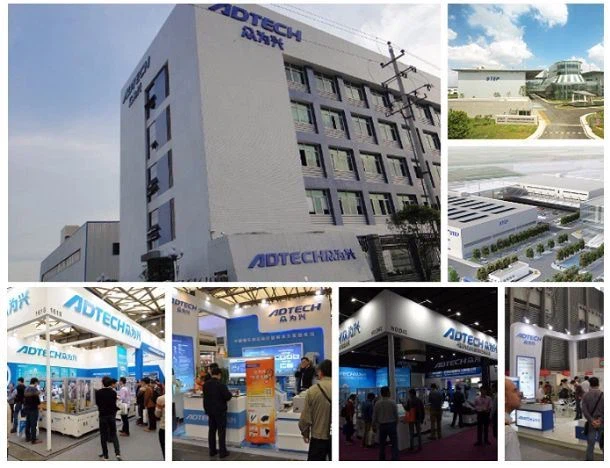
Our Factory
The factory is an associated company ADTECH (SHENZHEN) TECHNOLOGY CO.,LTD, located in Building B3, Pujing Guangmimng High-Tech Park, Guangming New District, Shenzhen. It occupy 7,560 square meter, has 144 employee. We have our own brand. Also accept ODM&OEM. Meanwhile, We have strict quality control measures to ensure the quality of products leaving the factory.
FAQ
Q: What does a CNC controller do?
Q: What does CNC stand for?
Q: What do you mean by CNC control?
Q: What is the basic CNC control?
Q: Is a CNC controller a computer?
Q: Can a CNC machine engrave?
Q: Why do people use CNC?
Q: How is CNC controlled?
Q: How many types of CNC control are there?
There are primarily two types of CNC machine control systems: Open-loop and Closed-loop (also known as Feedback control). Open-loop Control: In an open-loop CNC system, the machine's control unit sends commands to the motors based on pre-programmed instructions.
Q: Is CNC operator a good job?
Q: Is CNC machinist a hard job?
Q: Does CNC require math?
Q: What is CNC vs PLC?
Q: Are CNC machines AC or DC?
Q: Who runs a CNC machine?
Q: Why is it called CNC?
Q: 17.What is the biggest disadvantage of using CNC?
Cost: CNC machines are more expensive and require a greater initial investment than machines that can be operated manually. ... Skills Loss: As the demand for manual machine operators decreases, fewer and fewer new students adopt those skills.
Q: What are the disadvantages of CNC machines?
Q: What industry uses CNC?
Q: Can I learn CNC machining online?
As one of the most professional cnc controller manufacturers and suppliers in China, we're featured by quality products and good service. Please rest assured to buy customized cnc controller at competitive price from our factory.