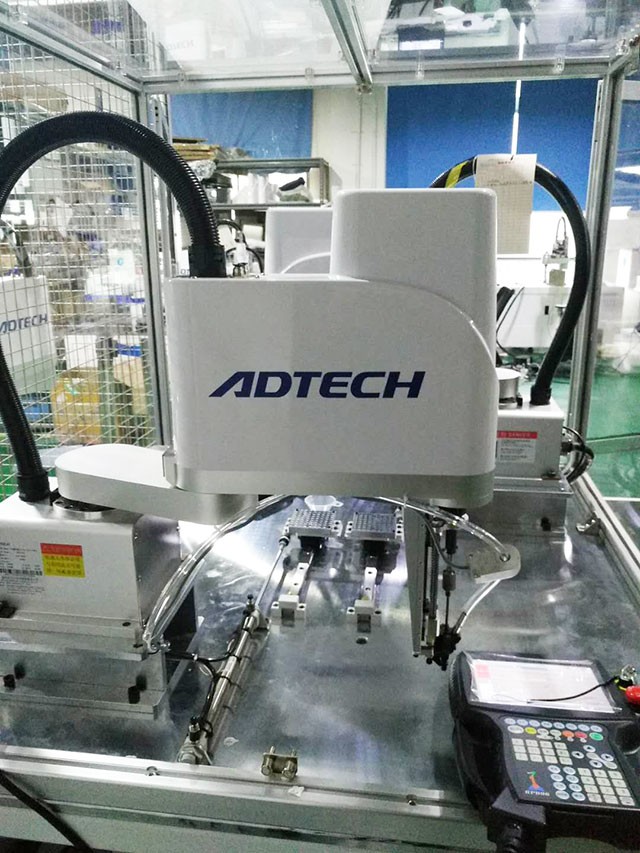
5G is a prelude to the era of Industry 4.0 and a powerful booster for industrial manufacturing. Miao Wei, minister of industry and information technology at this year's two sessions, said that 5G licenses will be issued soon. So what exactly will 5G bring to manufacturing?
2019 is known as the "first year of 5G", which will enable industrial automation, Internet of vehicles, Internet of Things, smart devices and other fields.
Let's look at the features of 5G!
★5G download speed is very fast, one second to download a high-definition movie;
★5G network can simultaneously drive a large number of intelligent hardware;
★5G almost no delay (4G delay 0.045 seconds, 5G delay 0.001 seconds);
★5G, through ubiquitous intelligent hardware, breaks the traditional limitation of passive data APP into active data;
★D2D: In the 5G era, if two users at the same base station communicate with each other, their data will no longer be forwarded through the base station, but directly from device to device.
Featuring high speed, low delay and cloud intelligence, 5G will bring huge changes to the robot industry based on the advantages of data collection, storage, processing and connection.
What can 5G bring?
Faster interaction, the interconnection of everything
4G cellular networks currently have round-trip delays of about 50ms, while 5G networks have unprecedented latency of 1ms. In addition, the peak downlink speed of 5G is 20Gbps, which is 20 times that of gigabit 4G networks. Data transmission can be "Device to Device" (D2D), which can connect more devices at the same time, and 5G technology can usher in a true "Internet of everything" era.
Simplify plant layout and reconfigure assembly line processes
The development of digital factories may bring about changes in factory layout. When industrial robots are introduced into factories, they also need to be replaced when changing processes, which will naturally be accompanied by heavy and time-consuming work such as relaying communication lines for controlling robots. In addition, after the production line is updated, the movements of robots need to be fine-tuned when they are running again, which will lead to the factory being stuck in operation for a long time.
With 5G technology, wired lines inside factories will be replaced by mobile communications, eliminating the necessary step of relaying lines. At the same time, after the introduction of high-precision three-dimension measurement sensor, the link of robot movement debugging can transmit the information captured by the sensor through 5G, which greatly reduces the time of factory shutdown caused by manufacturing process changes and reassembly. Factory layout and reconfiguration of assembly lines will be easier than ever with iot's end-to-end connectivity model.
For robot intelligent production to provide greater flexibility and cost advantage
Thanks to 5G's 1ms latency, 5G's speed increases will simplify data collection and enable comprehensive and continuous monitoring of workflows, including remote diagnostic maintenance, which will help reduce operational and administrative costs for production itself. 5G wireless connection technology will bring great flexibility and cost advantages to the intelligent production of robots, and 5G's cloud-based unified architecture will also enable real-time control of the cloud in the future.
Greatly reduce the frequency of robot injury events
Today, most robots are equipped with an emergency brake button to prevent them from injuring or causing damage to humans. But what if the button is out of reach at the moment people need it? And wirelessly controlled via a 5G connection, it allows the robot to send performance data in real time, enabling the company to monitor and prevent any problems, and the ability to remotely operate the robot at any time, allowing for a remote emergency stop. Tech giants Nokia and Bosch, for example, are already developing fetch and drop robots that can be controlled wirelessly via 5G connections.
Achieve future factory to individual customization
The era of 5G wireless mobile communication will realize the seamless connection between robots, operators and the entire factory, releasing all the charm of digital manufacturing. In the factory of the future, everyone may keep in touch with all the equipment, relying on the manufacturing services provided by the cloud system, robots can even respond to orders in real time, and individuals can place orders directly to the factory to complete customized production.