


Motion control is one of the cores in the field of industrial control, which plays a huge role in printing, packaging, assembly and other industrial scenarios. Motion control originated from motor control, the task of motor control is to control a single motor torque, speed, position and other parameters, so that the motor to complete the specified action. The motion control is based on the motor control to achieve the control of multiple motors, motion control system automatically coordinate multiple motors to complete the specified movement. The application of complex and precise motion control system not only greatly reduces the production cost, but also reduces the occurrence of misoperation in processing and improves the quality of products. Nowadays, with the rapid development of industrial production automation technology, a variety of motion control systems are widely used in logistics industry and large assembly lines.
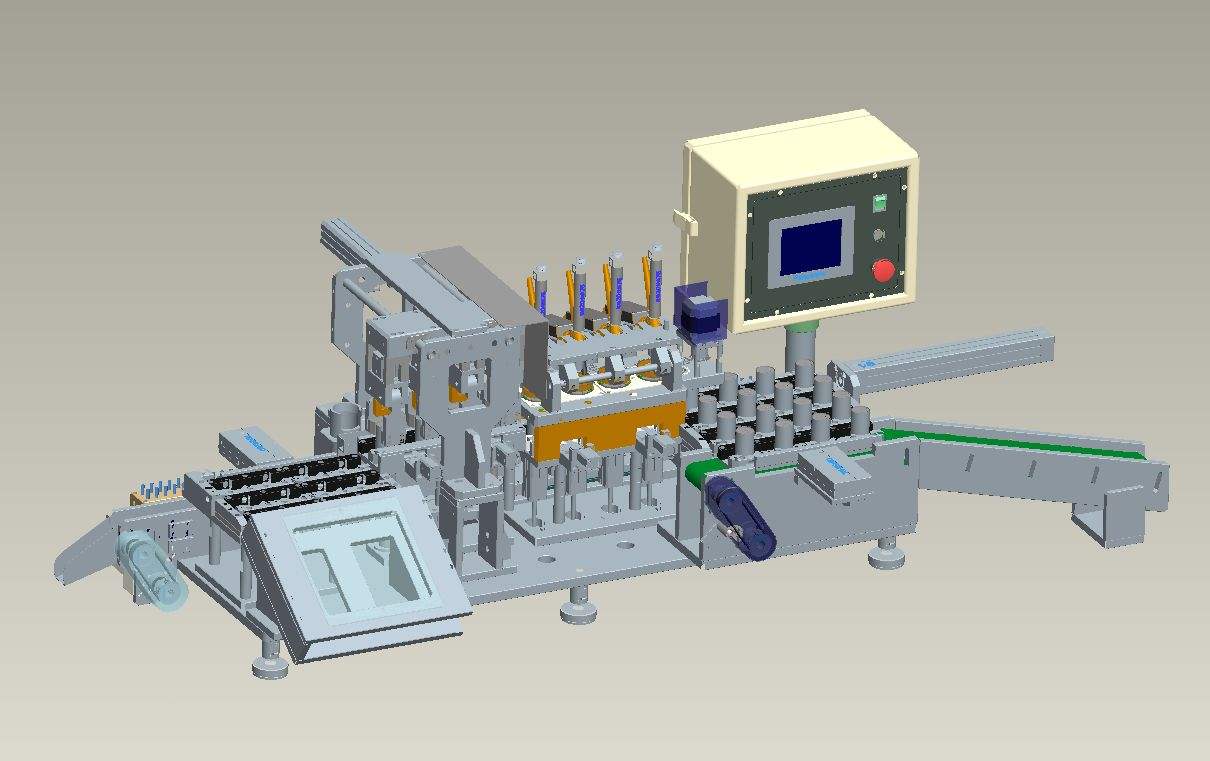
The robot arm that frequently appears in our vision is the most critical link of motion control system to help industrial production. At present, the most advanced robot arm in the world has 7 gearless joints, each motor drives a joint movement. When the manipulator is in normal operation, the motion control system coordinates seven motors at the same time, so that the manipulator can easily grasp objects at any position in the space. Not only that, it can perform other complex functions, it can even help people clean up or play an instrument.
A few years ago, sweeping robots exploded on the Internet as an epitome of motion control. The motion control system will drive the motor to perform different actions, so that the robot can complete the task efficiently. In the factory, the robot arm is widely used in the assembly line, in the automobile manufacturing assembly line, the robot arm can easily lift tens of kilograms or even hundreds of kilograms of parts to complete welding and assembly. We can see that motion control systems are not only used in industry, but also in our lives.
In order to understand the motion control system, it is necessary to focus on the executors of the motion command - the motor. Most of the motors used in the motion control system are stepper motors and servo motors. The following Xiaobian will briefly introduce the two kinds of motors.
1 Step motor
Stepping motor can transform the input pulse signal into angular displacement, in the normal operation of the stepping motor, the motor speed, position, plus or minus speed only depends on the frequency and number of pulse signals, and is not affected by the load change. When the stepper motor driver receives a pulse signal, he drives the stepper motor to rotate at a fixed Angle in the set direction. It's called "step Angle," and its rotation is done step by step, one step at a time, and that's where the stepson motor gets its name.
2 Servo motor
The servo motor converts the received electrical signal into the angular displacement output on the motor shaft. The servo motor driver controls the three-phase electricity to form an electromagnetic field, and the rotor rotates under the action of the magnetic field. The encoder of the servo motor feeds back the signal to the driver, and the driver adjusts the rotation Angle of the rotor according to the comparison between the feedback value and the target value.
Comparison of two types of motors
1. Different control methods
Stepper motor adopts open-loop control, servo motor adopts closed-loop control, the difference between the two control methods is that closed-loop control will compare the target value and the actual value, adjust the motor position, compared with the control accuracy of servo motor is better than stepper motor.
2. Different control accuracy
The more phases the stepper motor has, the higher its accuracy will be. The 2-phase motor has low cost, but the vibration is large at low speed, and the torque drops fast at high speed. The 5-phase motor has small vibration and good high-speed performance, which is 30~50% higher than the speed of the 2-phase motor, and can even replace the servo motor in some occasions. The servo motor has its own encoder, the more the scale of the encoder, the higher the accuracy. In general, the accuracy of the servo motor is equivalent to the step Angle of 0.036 degrees stepper motor, of course, there is no such a small step Angle of the stepper motor, the step Angle of the general stepper motor is 1.8, the above is just a metaphor, thus, in the implementation of high-precision motion control, the performance of the servo motor far beyond the stepper motor.
3. Different low-frequency characteristics
Unlike servo motors, stepper motors use damping technology or subdivision technology to overcome low speed vibration phenomenon at low speed. Stepper motor at low speed is still prone to vibration phenomenon, and servo motor no matter at high speed or low speed will not appear vibration phenomenon.
4. Different sports performance
Stepper motor for open loop control, starting frequency is too high or load is too large easy to cause the phenomenon of step loss, stop speed is too high easy to overshoot phenomenon, servo motor for closed loop control, servo drive can directly sample the feedback signal of the motor encoder-formed internal speed loop and position loop, generally will not appear step loss or overshoot phenomenon.
5. Speed varies accordingly
It takes hundreds of milliseconds for stepper motor to accelerate from static to working speed, while servo motor generally only takes a few milliseconds, which can be used for control occasions requiring fast start and stop.
From the above comparison, servo motor is better than stepper motor in many aspects of performance, that is not we in the selection of motor model when all servo motor on the line? Not so, the price of the servo motor will be much higher than the stepper motor, stepper motor will beat the servo motor in terms of cost performance, after mastering the characteristics of the two motors, according to different needs, it is particularly important to choose the right type of motor.
Motion control systems are not only composed of motors and drives, but more important than them is control, control schemes or algorithms that coordinate the movement of multiple motors. For example, there is a motion system in which a turntable driven by two motors is filled with film, so that the film can be unwound from one turntable to another at a set speed without breaking. In the process of film winding, the winding diameter of the two turntable will change constantly. In order to ensure that the film does not break and meet the specified film winding speed, it is necessary to constantly adjust the speed of the two motors. In this case, PID algorithm is needed to do closed-loop control, so that the feedback value of the controlled object: tension affects the speed of the motor. In this way, relying on the performance of fast response of the servo motor, the speed is reduced when the tension is too large, and the speed is accelerated when the tension is too small. Under constant adjustment, the tension and winding speed of the film meet the requirements.
In addition to the PID algorithm, the motion difference complement algorithm is also used in the manipulator control system with 6 degrees of freedom or even 7 degrees of freedom to ensure that the manipulator runs to the specified position. The quality of the motion control system scheme determines whether the system is safe and reliable, and whether the efficiency is high. Having excellent program design ability will make us more competitive.