


Stone bridge cutting machine is a device used for stone processing, mainly for cutting marble, granite and other stones. It usually adopts a bridge structure and achieves precise cutting of stone through a numerical control system. Modern stone bridge cutting machines usually have multiple functions, including cutting, chamfering, edge grinding, drilling, slotting, rounding and other irregular processing.
Traditional stone bridge cutting machines can usually only achieve horizontal and vertical cutting, and are not flexible enough for irregular and imitation processing; And the cutting process is cumbersome, greatly increasing production costs after mistakes The operation control system specially designed by STEP for stone bridge cutting machines can effectively solve the pain points of traditional processing.

Pain points of traditional processing of stone bridge cutting machine
Limitations of traditional infrared three-axis machining
In the field of stone processing, traditional infrared three-axis machines have long occupied a place, but their functional limitations are becoming increasingly prominent. Most traditional infrared axis machines can only achieve horizontal and vertical cutting, which severely limits the creativity of stone processing. In the field of modern architecture and art design, the demand for irregular shaped stone products is increasing day by day, such as decorative stones with unique curves and irregular shapes, as well as various artistic sculpture stones. Therefore, traditional infrared three-axis bridge cutting machines cannot meet the diverse design concepts and aesthetic needs of the market.
Traditional three-axis infrared machine tool alignment problem
There is a key challenge in the operation process of traditional three-axis infrared machines - the complexity of the tool alignment process. Knife alignment is a crucial step in stone processing, requiring extremely high precision and operational skills. In the traditional three-axis infrared machine tool alignment process, operators need to perform a series of complex operations. This not only requires operators to have rich experience and professional knowledge, but also requires a lot of time to adjust the position relationship between the tool and the stone. Even small errors can be amplified during this process, leading to machining errors. This kind of mistake may manifest as cutting size deviation, cutting position errors, and other issues, seriously affecting the quality and efficiency of stone processing. Therefore, the complex cutting process has become a major bottleneck in the stone processing.
STEP Upgrade Solution
The upgraded five axis stone bridge cutting machine with STEP's new operation control system has brought answers to the above stone processing problems.
CAM interface+CAD compatibility makes it easy to handle irregular machining
The built-in image library in the CAM interface is a rich treasure trove of creativity. Operators can easily select the desired graphics in the gallery, such as rectangles, sectors, stove tops, profiles, etc. More importantly, they can edit these graphics at any time according to specific design requirements. This feature provides powerful design support for the processing of irregular stone materials, making the processing process more flexible.

Fashionable irregular countertop

Shape cutting
CAM interface with built-in image library
In addition, the system performs excellently in terms of compatibility with CAD software, supporting seamless CAD import. Whether it is through direct import of DXF files or through the use of AutoCAD plugins, perfect integration can be achieved.

This close integration with CAD provides great convenience for irregular machining. Whether it's complex geometric shapes or artistic free-form curves, they can be accurately transformed into actual machining paths. The new STEP bridge cutting machine operation and control solution eliminates the traditional mode of horizontal and vertical cutting in stone processing, making it easy to process irregular shapes and meeting the market's demand for diversified and personalized stone products.
Visual technology bids farewell to the revolutionary technology of 'knife to knife'
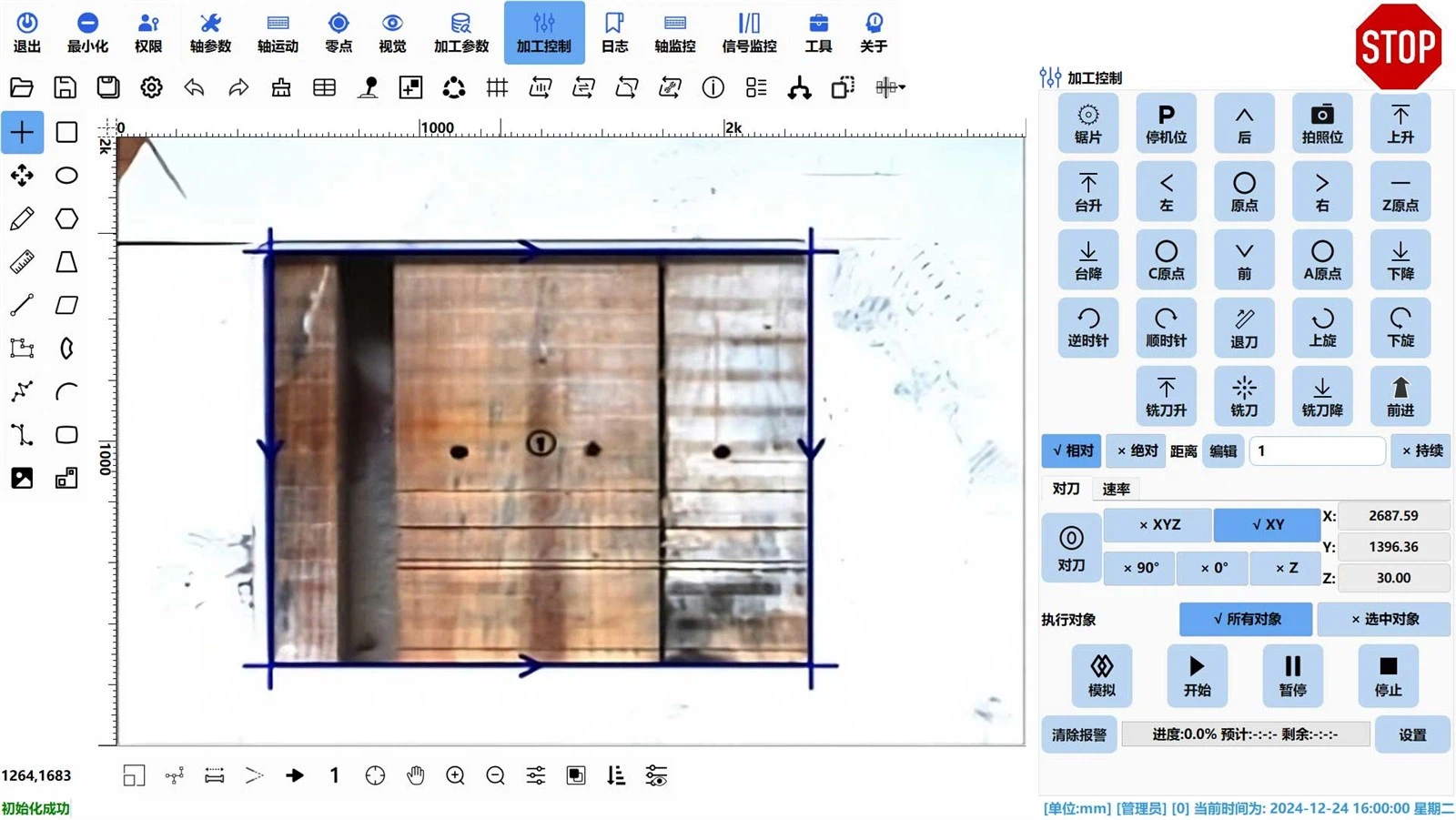
In the previous text, we mentioned that in traditional craftsmanship, "tool alignment" is a difficult, complex operation, and high cost of trial and error. The application of visual technology completely abandons the cumbersome tool alignment process of traditional three-axis infrared machines. By installing high-precision industrial cameras, real-time visual monitoring of the stone processing process has been achieved. The operator only needs to place the design graphics in the ideal position, and the visual system of the stone bridge cutting machine will accurately capture this information and ensure that the actual processing position is completely consistent with the design position. This is a WYSIWYG operation mode that reduces reliance on the skill level of operators, minimizes human errors during the machining process, and avoids material waste caused by tool alignment errors.
The key to enhancing the artistic value of stone through visual texture function
In the field of high-end architectural decoration and artistic stone, the texture of stone is an important manifestation of its value. Whether it is large-scale decorative stone that pursues natural texture continuity or artistic sculpture stone that has strict requirements for texture patterns, it is necessary to ensure that each piece of stone can accurately display its unique texture charm and design intent after cutting.


So, what is the visual function of tattooing? After the stone drawing operation is completed, the operator begins to arrange the shape of the graphic, and the visual matching function begins to play a role. Through advanced image processing algorithms and visual recognition technology, the system is able to generate real-time pattern previews of the cut stone shape. The preview pattern will dynamically update with changes in the placement of the stone, accurately displaying the texture effect after cutting.

Configuration Introduction

Application configuration:
ADT-6320E-B08 EtherCat Bus Motion Control Card 1 set
5 sets of EtherCat bus type servo
1 set of industrial camera
Application parameters:
Accuracy: ± 0.2mm
Industry advantages:
Provide a gallery that supports irregular cutting
No need for every knife alignment, supports camera positioning
Support simultaneous cutting of multiple graphics to improve work efficiency
Support DXF import files and CAD plugins
Support real-time camera imaging for physical trajectory editing, etc
Support for texture recognition function
We firmly believe that continuous technological innovation and configuration optimization are key to enhancing user experience and meeting market demand. STEP is committed to providing users with a range of innovative processing solutions that improve production efficiency, reduce costs, ensure precision in the processing process and high standard consistency of products, and meet the strict requirements of the market for the continuous improvement of stone product quality.