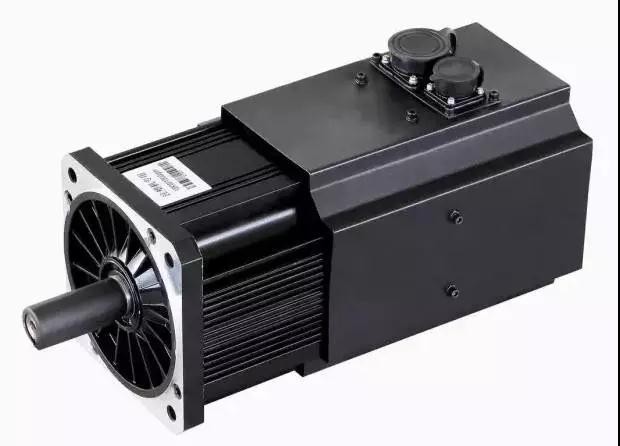
1. How to choose servo motor and stepper motor correctly?
Answer: Mainly depends on the specific application situation, simply to determine: the nature of the load (such as horizontal or vertical load, etc.), torque, inertia, speed, accuracy, acceleration and deceleration requirements, upper control requirements (such as port interface and communication requirements), the main control mode is position, torque or speed mode. Power supply is DC or AC power supply, or battery power supply, voltage range. Based on this, the model of the motor and the matching drive or controller can be determined.
2. Stepper motor or servo motor system?
Answer: In fact, what kind of motor should be selected according to the specific application, each has its own characteristics.
3. How to use stepper motor driver?
A: According to the current of the motor, use a driver greater than or equal to this current. If low vibration or high precision is required, subdivision actuators can be used. For large torque motor, use high voltage drive as far as possible to obtain good high speed performance.
4.2 What is the difference between phase and 5-phase stepper motor and how to choose it?
A: The 2-phase motor has low cost, but the vibration is large at low speed, and the torque drops fast at high speed. The 5-phase motor has less vibration and good high-speed performance, which is 30~50% higher than the speed of the 2-phase motor. It can replace the servo motor in some occasions.
5. When to choose DC servo system and what is the difference between it and AC servo?
A: DC servo motors are divided into brushless and brushless motors.
Brush motor has low cost, simple structure, large starting torque, wide speed range, easy control, need maintenance, but convenient maintenance (carbon brush), electromagnetic interference, environmental requirements. Therefore, it can be used in cost-sensitive industrial and civil applications.
Brushless motor is small in size, light in weight, large in output, fast in response, high in speed, small in inertia, smooth in rotation and stable in torque. The control is complex, easy to realize intelligent, its electronic commutation mode is flexible, can be square wave commutation or sine wave commutation. Motor maintenance-free, high efficiency, low operating temperature, electromagnetic radiation is very small, long life, can be used in a variety of environments.
Ac servo motor is also brushless motor, divided into synchronous and asynchronous motor, the current motion control is generally used synchronous motor, its power range is large, can do a lot of power. Large inertia, low maximum rotational speed, and with the increase of power rapidly decreased. Therefore, it is suitable for the application of low speed and smooth operation.
6. What should be paid attention to when using the motor?
A: The following checks should be made before power on and running:
1) Whether the power supply voltage is appropriate (overvoltage is likely to cause damage to the driver module); For the DC input +/- polarity must not be wrong, whether the motor model or current set value on the drive controller is appropriate (not too large at the beginning);
2) The control signal line is reliable, it is best to consider the shielding problem in the industrial site (such as the use of twisted pair);
3) Do not connect all the wires that need to be connected at the beginning, only connect the most basic system, and then gradually connect after it runs well.
4) Be sure to figure out the grounding method, or use floating air connection.
5) Within half an hour after the start of operation, closely observe the state of the motor, such as whether the movement is normal, sound and temperature rise, and immediately stop the machine for adjustment if any problem is found.
7. When the stepper motor starts and runs, sometimes it does not move or moves in place, and sometimes it loses step when it runs. What is the problem?
Generally, the following aspects should be considered for inspection:
1) Whether the motor torque is large enough to drive the load, so we generally recommend users to choose the motor with a torque 50%~100% greater than the actual need when selecting the type, because the stepper motor can not run over the load, even if it is instantaneous, it will cause the loss of step, serious stop or irregular repeated movement in place.
2) Whether the current of the input stepping pulse from the upper controller is large enough (generally >10mA) to make the optical coupling conduct stably, and whether the input frequency is too high to receive it. If the output circuit of the upper controller is CMOS circuit, the CMOS input driver should also be selected. Wechat technology training is worth your attention.
3) Whether the starting frequency is too high, whether the acceleration process is set in the starting procedure, it is best to accelerate from the specified starting frequency of the motor to the set frequency, even if the acceleration time is very short, otherwise it may be unstable, or even in the idle state.
4) When the motor is not fixed properly, this condition sometimes occurs, which is normal. Because, in fact, it causes a strong resonance of the motor and leads to the out-of-step state. The motor must be fixed in place.
5) For 5-phase motor, if the phase connection is wrong, the motor will not work.
8. I want to control the servo motor directly through communication. Is that possible?
Yes, but also more convenient, just the speed of the problem, for the response speed is not too high requirements of the application. If fast response control parameters are required, it is best to use servo motion control card, generally it has DSP and high speed logic processing circuit, in order to achieve high speed and high precision motion control. Such as S acceleration, multi-axis interpolation, etc.
9. How about switching power supply for stepper and DC motor systems?
Generally, it is best not to, especially for large torque motors, unless the switching power supply is more than twice the required power. Because, when the motor works, it is a large inductive load, which will form an instantaneous high voltage on the power supply end. The switching power supply overload performance is not good, will protect off, and its precision voltage regulation performance is not needed, sometimes may cause damage to the switching power supply and the driver. A DC power supply that can be changed with a conventional ring or R-type transformer.
10. Can you control the stepper motor with a DC voltage of ±10V or 4~20mA?
Yes, but another conversion module is required.
11. There is a servo motor with encoder feedback. Can it be controlled by servo drive with speed measuring port only?
Yes, it needs to be equipped with an encoder to speed measuring machine signal module.
12. Can the code plate part of the servo motor be disassembled?
It is forbidden to disassemble, because the quartz chip in the code plate is easy to break, and after entering the dust, the life and accuracy will not be guaranteed, and professional maintenance is required.
13. Can stepper and servo motors be disassembled for maintenance or modification?
No, it is best to let the manufacturer do it. After disassembling, it is difficult to install it back without professional equipment. The gap between the stator of the motor cannot be guaranteed. The performance of magnetic steel material is destroyed, and even cause magnetic loss, motor torque greatly decreased.
14. Can the servo controller sense the change of external load?
Stop, return or maintain a certain thrust to follow up when the set resistance is encountered.
15. Can I use domestic drive or motor with foreign high quality motor or drive?
In principle, it is possible, but it can only be used after making clear the technical parameters of the motor, otherwise it will greatly reduce the due effect, and even affect the long-term operation and life. It is best to consult the supplier before deciding.
16. Is it safe to drive the motor with a DC supply voltage greater than the rated voltage?
Normally this is not a problem, as long as the motor is running within the set speed and current limits. Because the motor speed is proportional to the motor line voltage, the selection of a certain supply voltage will not cause overspeed, but the driver and other faults may occur.
In addition, it is necessary to ensure that the motor meets the minimum inductance requirements of the driver, and also ensure that the set current limit is less than or equal to the rated current of the motor.
In fact, if you can make the motor run relatively slowly (below rated voltage) in your design, this is fine.
Running AT A LOWER VOLTAGE (AND THEREFORE a LOWER SPEED) RESULTS IN LESS BRUSH RUNNING BOUNCE, LESS BRUSH/commutator WEAR, LOWER CURRENT CONSUMPTION AND a longer MOTOR life.
On the other hand, if the motor size limitation and performance requirements require additional torque and speed, excessive drive motor is also possible, but will sacrifice the service life of the product.
17. How to choose the right power supply for the application?
It is recommended to choose a supply voltage value 10%-50% higher than the maximum required voltage. This percentage varies with Kt, Ke, and the voltage drop in the system. The current value of the drive should be sufficient to transmit the energy required for the application. Remember that the driver's output voltage value is different from the supply voltage, so the driver's output current is also different from the input current. To determine the appropriate supply current, calculate all the power requirements for the application and add another 5%. The required current value can be obtained by calculating according to the formula I = P/V.
It is recommended to choose a supply voltage value 10%-50% higher than the maximum required voltage. This percentage varies with Kt, Ke, and the voltage drop in the system. The current value of the drive should be sufficient to transmit the energy required for the application. Remember that the driver's output voltage value is different from the supply voltage, so the driver's output current is also different from the input current. To determine the appropriate supply current, calculate all the power requirements for the application and add another 5%. The required current value can be obtained by calculating according to the formula I = P/V.
18. What mode of operation can I choose for the servo drive?
The different modes are not all present in all models of drives
19. How are the drives and systems grounded?
A. Do not ground the non-isolated port of the DC bus or the non-isolated signal to the ground if there is no isolation between the AC power supply and the driver DC bus (such as a transformer). This may cause equipment damage and personal injury. Because the AC COMMON voltage IS NOT to the EARTH, there may be a high voltage BETWEEN THE DC bus ground and the earth.
b. In most servo systems, all common ground and ground are connected at the signal end. Ground loops generated by various ways of connecting the earth are susceptible to noise and generate flows at different reference points.
c. To keep the command reference voltage constant, connect the driver's signal ground to the controller's signal ground. It will also be connected to the ground of an external power supply, which will affect the operation of the controller and the driver (e.g. 5V power supply of the encoder).
d. Shielding layer grounding is more difficult, there are several methods. The correct shield connection is at the reference point inside its circuit. This point depends on whether the noise source and the receiver are grounded at the same time, or float. Make sure that the shield is grounded at the same point so that the ground current does not flow through the shield.
20. Why can't the reducer match the motor exactly at the standard torque point?
If the maximum continuous torque generated by the motor through the reducer is taken into account, many reduction ratios will far exceed the torque rating of the reducer.
If we were to design each reducer to match the full torque, the internal gears of the reducer would have too many combinations (large volume and material).
This will make the product price high, and violate the product "high performance, small volume" principle.
21. How to choose electric cylinder, slide, precision platform products? How is the cost calculated?
The key to choosing actuator products depends on what kind of requirements you have for motion parameters. You can determine the technical conditions such as specific motion parameters according to your needs. These parameters should meet your actual needs, not only meet the application requirements and leave room, but also do not raise too high, otherwise the cost may be several times that of standard products. For example, if 0.1mm accuracy is sufficient, do not choose the parameter of 0.01mm. The same goes for other things such as load capacity and speed.
Another suggestion for users is that if it is not necessary, the three main parameters of push and pull force or load bearing, speed and positioning accuracy should not be required to be high at the same time, because the actuator is a high-precision and high-tech electromechanical integration product. We need to design and manufacture from the mechanical structure, electrical performance, material characteristics, material and processing methods and other aspects of the consideration and selection of the corresponding components of the motor, drive controller and feedback device, as well as different precision levels of the guide rail, screw, support and other mechanical systems, so as to achieve the required overall motion parameters, can be said to pull a whole body of the product. Of course, if you have high requirements for products, we can still meet them, but the cost will be increased accordingly.