


With the development of machine vision now, the application of machine vision is more and more extensive, machine vision detection technology is characterized by high speed, large amount of information, more functions, currently in the industrial application field is broad, so what is the future trend of machine vision detection? Let's introduce to you the future trend of machine vision detection.
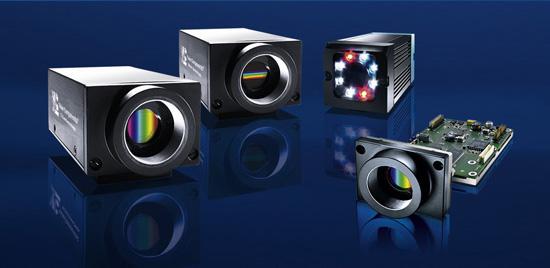
First, embedded vision will continue to grow
Embedded vision will continue to grow rapidly, supported by a growing number of industry applications, such as autonomous driving, life sciences, consumer electronics, border surveillance, and agriculture.
Processing power is greatly increased and memory becomes very cheap. Users can choose a very small camera and use cloud data from different sources. When these factors are combined with machine learning, there is an inherent vision when using a separate package.
The customer expects the system integrator to develop the entire embedded vision system for them. Embedded vision enables smart cameras to achieve their original intent, which is to perform image processing and video analysis as close to the image sensor as possible in a very small housing. In response to the embedded vision market, many companies have developed solutions to quickly deliver application-specific solutions in low-cost, low-power platforms that can integrate artificial intelligence and deep learning capabilities.
Designing an attractive system for the customer is the challenge of embedded vision. With low-cost, low-power devices, it is possible to put all the functions of the customer in appearance detection in a small size, which is a difficult task. Introducing consumers to radically different hardware solutions is not easy, but ultimately the hope is that customers will somehow produce more products that are more user friendly, smaller, and ultimately less costly.
In many use cases, traditional visual detection cannot compete with embedded vision.
Second, more applications of deep learning
Deep learning for visual detection has been at the forefront of disruptive technologies. If you're involved in the visual inspection industry, you've probably seen how this software integrates with deep learning algorithms and produces fast results. These systems can run thousands of permutations and have 100% accuracy in identification and history as well as visual inspection of other applications.
Deep learning will have a profound impact on traditional image analysis methods. This will not only change the products we make, but also the way we interact with our customers. Deep learning will play an important role in solving applications that cannot be solved by traditional visual detection.
For example, when vaccines are tested in freeze-dried vials, the results vary widely from time to time, largely depending on how they are dried. Using a traditional detection process is challenging because in some cases, it may be that particles look very similar to cracks, and deep learning helps to distinguish such subtle differences.
Third, improve the efficiency of invisible imaging
Although deep learning may be a way to gather information from images, it is not a single option. Advances in short-wave infrared cameras and lighting have improved the efficiency of invisible imaging. In these higher wavelength environments, you can achieve many more applications, such as finding defects inside the composites of aircraft wings.
There is a growing demand for hyperspectral imaging. When you look at hundreds of spectral strips over a large area to detect subtle differences between objects, you need a broadband light source. This will allow us to reduce the number of leds we use and create broadband that mimics halogen light sources.